


Quick answer: Afterschool program marketing works when it answers the questions parents ask first: is it safe, what will my child do, when does it run, how do they get there and what does it cost. Show those answers on a clear enrollment page, get found in local search and maps, collect parent reviews, partner with nearby schools, run tightly targeted Meta and Google ads to parents in your area, and follow up fast. Demand is high: parents of 22.6 million U.S. children not in a program say they would enroll if one were available.
Key takeaways
- Parents of 29.6 million U.S. children want an afterschool program; 22.6 million of those children are not enrolled (America After 3PM, 2025).
- 77% of afterschool demand is unmet, so many families are looking but not finding a fit.
- Cost (56%), safe transportation (49%), location (48%) and hours (45%) are the top barriers parents report.
- 92% of parents with a child in a program say it lowers their stress because their child is safe.
- Only 4% of consumers say they never read online reviews (BrightLocal, 2025), so reviews matter.
Is there demand for afterschool programs?
Yes, and most of it is unmet. The 2025 America After 3PM survey from the Afterschool Alliance found that parents of 29.6 million children would like their child in an afterschool program. About 7 million children are enrolled, and 22.6 million are not but would be if a program were available, meaning 77% of demand is unmet (America After 3PM, 2025). Among children not in a program, parents of 58% of elementary schoolers, 49% of middle schoolers and 38% of high schoolers say they would enroll them.
That gap tells you something important about marketing: many parents are already looking. The job is to be found, answer their concerns quickly and make enrolling easy.
What do parents want from an afterschool program?
Safety and peace of mind come first. In the same survey, 92% of parents with a child in a program said it helps them feel less stressed because their child is safe, and 82% said it lets them keep their job or work more hours. Majorities agreed programs support mental health and well-being (79%), keep kids safe and out of trouble (78%) and help children build positive relationships with other students (84%) (America After 3PM, 2025).
Your messages should lead with those outcomes: a safe, supervised place; caring staff; activities children enjoy; homework help; and hours that fit a working day.
What stops parents from enrolling?
America After 3PM lists the top barriers among parents without a child in a program:
| Barrier | Share of parents |
|---|---|
| Programs are too expensive | 56% |
| No safe way to get to and from the program | 49% |
| Locations are not convenient | 48% |
| Hours do not meet their needs | 45% |
| No program available in their community | 42% |
| No spaces or waitlist too long | 35% |
Source: America After 3PM, 2025.
Good marketing addresses these head-on. If you offer pickup from nearby schools, sibling discounts, sliding-scale fees, subsidies or late hours, say so on every page and in every ad.
Step 1: Build an enrollment page that answers everything
Most afterschool websites hide the details parents need. One clear page should cover:
- Who it is for (grades and ages) and where it runs.
- Daily schedule, days, hours and late pickup.
- Activities: homework help, STEM, arts, sports, clubs.
- Staff qualifications, ratios, background checks and safety policies.
- Transportation or school pickup options.
- Tuition, fees, discounts and any accepted subsidies.
- Photos of real children and spaces (with permission).
- A simple enroll or tour button and a phone number that is answered.
Keep the form short and mobile-friendly. For ideas on design, see our guide to private school website design; the same principles apply.
Step 2: Get found in local search and maps
Parents search phrases like “afterschool program near me” or “after school care [neighborhood]”. Claim and complete your Google Business Profile with categories, hours, photos and your enrollment link. Google says local results are based mainly on relevance, distance and prominence (Google Business Profile Help). Create a page for each location, and use the words parents use, including your city and the schools you serve.
Step 3: Collect parent reviews
Parents trust other parents. BrightLocal’s 2025 survey found only 4% of consumers say they never read online reviews, and 96% are open to writing one (BrightLocal). Ask happy families for a Google review at natural moments, such as the end of a term or after a showcase. Reply to every review, positive or negative, politely and quickly.
Step 4: Partner with nearby schools
Schools are where your families already are. Offer to share flyers in school newsletters, attend back-to-school nights, provide pickup from campus and coordinate schedules with bell times. Partnerships with parent-teacher groups, community centers, churches and youth sports leagues can also bring referrals.
Step 5: Run local Meta and Google ads to parents
Paid ads let you reach parents near each location at the right moments: back-to-school season, winter break planning and before summer. Target parents by location and relevant interests, and send ads to the enrollment page or a tour booking page. As a benchmark, WordStream’s 2026 data for education lead campaigns on Facebook shows an average cost per lead of $31.82 (WordStream). Google search ads for “after school program near me” capture parents who are ready to act. Our guide to Facebook and Instagram ads for schools covers setup and creative.
Step 6: Follow up fast and run tours
Parents often contact several programs at once. Call or text back the same day, offer a tour or trial day, and send a short follow-up with pricing and next steps. Keep a waitlist list and contact those families when seats open. Our guide to school inquiry response time explains why speed matters.
Step 7: Use referrals and word of mouth
Satisfied parents are your best channel. America After 3PM found 95% of parents with a child in a program are satisfied overall with it (America After 3PM, 2025). Give them an easy way to refer friends, such as a referral credit or a sibling discount, and share simple, shareable updates about what children are doing.
Which messages work best?
- “Safe, supervised and fun from 3 to 6 p.m.” Lead with safety and hours.
- “Pickup from [school names].” Remove the transportation worry.
- “Homework done before dinner.” Speak to busy evenings.
- “STEM, art and sports every week.” Show variety children will enjoy.
- “Ask about sibling discounts and subsidies.” Address cost up front.
- “Spots are limited for fall.” Use real urgency only when it is true.
What does a yearly afterschool marketing calendar look like?
| Season | Focus |
|---|---|
| Spring | Open fall enrollment, early-bird pricing, summer camp cross-promotion |
| Summer | Back-to-school ads, school partnerships, open houses and tours |
| Late August to September | Peak enrollment push and fast follow-up |
| October to December | Referrals, reviews and waitlist management |
| January | Mid-year openings and spring enrollment |
If you also run summer programs, see summer program marketing for schools.
How do you measure afterschool marketing?
Track inquiries, tours booked, enrollments and cost per enrollment by channel. Use a simple CRM or spreadsheet with the source of every inquiry, and tag ad links with UTMs. Watch occupancy by location and day of the week, and shift ad budgets to locations with open seats. Our guide to tracking ads to enrollment shows how to connect ads to enrollments.
Common afterschool marketing mistakes
- Hiding tuition and hours, which sends parents to competitors who show them.
- Using stock photos instead of real children and spaces.
- Running ads to a home page instead of an enrollment page.
- Letting calls and messages go unanswered after school hours.
- Ignoring reviews and Google Business Profile updates.
- Advertising across a whole metro area when families only drive a few miles.
- Forgetting older students. Middle and high school programs need different messages, such as clubs, sports, test prep and leadership, and teens often help choose.
Channels Brandastic manages
Brandastic plans and runs these channels for colleges and schools:
Every engagement starts with a first-month discovery and strategy phase. A strong strategy is what makes the campaigns work, so before anything launches we:
- Study your market and the schools you compete with for families.
- Define your ideal target families.
- Identify the parents, students and influencers to market to and what they care about.
- Build a communication plan: what to say, on which channels, and when.
- Pin down your school’s pain points, such as low inquiries or weak follow-up, and plan how to solve them.
- Decide whether to market locally, nationally or both.
For an example of results at scale, Brandastic’s enrollment campaigns for California Online Public Schools produce 1,500+ leads a month and a 118x return on ad spend (ROAS).
About the author: Justin Nassie is the President and Founder of Brandastic, an Orange County digital marketing agency he has run for 16 years. He has taught advanced web at Chapman University and has also taught at UC Irvine (UCI).
Keep reading: What an education marketing agency does; Summer program marketing for schools; Facebook and Instagram ads for schools; School social media post ideas.
Frequently asked questions
How do I market an afterschool program?
Build a clear enrollment page, get found in local search and maps, collect parent reviews, partner with nearby schools, run local ads to parents and follow up quickly.
Is there demand for afterschool programs?
Yes. America After 3PM 2025 found parents of 22.6 million children not in a program would enroll them if one were available, so 77% of demand is unmet.
What do parents look for in an afterschool program?
Safety, caring staff, convenient hours and location, transportation, engaging activities, homework help and an affordable price.
What stops parents from enrolling in afterschool programs?
The top barriers are cost (56%), lack of safe transportation (49%), inconvenient locations (48%) and hours that do not fit (45%).
Do Facebook ads work for afterschool programs?
They can, when targeted to parents near each location and sent to an enrollment or tour page. WordStream reports a $31.82 average cost per lead for education lead campaigns.
How important are reviews for afterschool programs?
Very. BrightLocal found only 4% of consumers never read online reviews.
Can Brandastic help market an afterschool program?
Yes. Brandastic builds enrollment pages, local SEO, reviews strategy and paid ads for schools and youth programs.
Our Work in Education
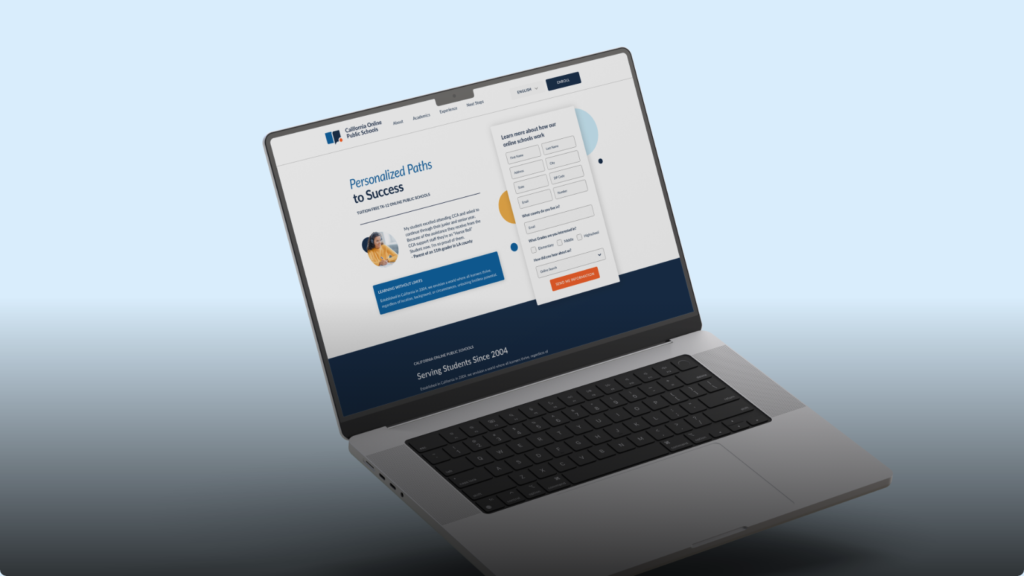
PORTFOLIO · ONLINE CHARTER SCHOOL
California Online Public Schools
1,500+ leads a month and 118x ROAS
View Project

Want to fill your afterschool seats? Book your free consultation.
Sources
- Afterschool Alliance, America After 3PM: Lost Opportunity: Afterschool in Demand but Out of Reach for Many (2025), https://wallacefoundation.org/sites/default/files/2025-10/AA3PM-Lost-Opportunity-Afterschool-in-Demand-But-Out-of-Reach-for-Many-Full-Report-2025.pdf
- BrightLocal, Local Consumer Review Survey 2025, https://www.brightlocal.com/research/local-consumer-review-survey-2025/
- WordStream, Facebook Ads Benchmarks, https://www.wordstream.com/blog/facebook-ads-benchmarks
- Google Business Profile Help, How to improve your local ranking on Google, https://support.google.com/business/answer/7091
By Justin Nassie, President and Founder of Brandastic. Brandastic is a Costa Mesa, California digital marketing agency founded in 2010 that has worked with 450+ brands and is a Google and Microsoft Partner. Last updated December 15, 2026.


