


Quick answer: A paid search agency for schools plans, builds and manages search ads, mostly on Google, that reach families looking for a school right now. For charter and public schools, a good agency targets only your enrollment area, writes accurate ads about eligibility and deadlines, sends clicks to focused landing pages and tracks results through applications and enrollment. You should own the ad account, see every search term and get reports in cost per application and per enrolled student, not clicks alone.
Key takeaways
- In Niche’s fall 2024 survey of 377 K-12 parents, Google was the starting point for 50% of school searches. Search ads meet families at that moment.
- The school, not the agency, should own the Google Ads account and billing. The agency should have user access.
- Google Ads can import conversions that happen offline, such as an application in your enrollment system, so campaigns optimize toward real outcomes.
- Charter and public schools must keep ads accurate about eligibility, lottery rules and tuition-free status, and limit targeting to the area they serve.
- Pew reports 91% of U.S. adults own a smartphone. Most search clicks will land on a phone, so landing pages must work there.
- Report weekly on search terms and spend, and monthly on applications and enrollments by campaign.
What does a paid search agency do for schools?
A paid search agency manages the ads that appear above and below search results when families search terms such as “charter school near me,” “kindergarten enrollment” or “tuition-free school” in your city. The work includes keyword research, campaign structure, ad copy, landing page advice, bids and budgets, negative keywords, conversion tracking, testing and reporting. Most school search budgets run on Google Ads, and some include Microsoft Advertising.
This guide explains what to expect when you hire one. If you want to build campaigns yourself, start with our Google Ads for schools setup guide.
Why do charter and public schools use paid search?
Paid search reaches families at the moment they are looking. In Niche’s October 2024 pulse survey of 377 parents and guardians with a child entering kindergarten through 12th grade in fall 2025, Google (50%) and Niche (25%) were the most common starting points for the school search (Niche). The same survey found that presence on search and review sites influenced 89% of respondents.
Search ads are also flexible. You can turn them up before a lottery deadline, focus them on grades with open seats and stop them when you are full. That makes paid search one of the most controllable channels for a public school with a fixed enrollment calendar. Our post on charter school lottery marketing shows how to time it.
What should a paid search agency set up first?
Before any ad runs, a good agency should build the foundation:
| Setup item | What good looks like |
|---|---|
| Account ownership | The school owns the account and billing; the agency has user access |
| Goals | Applications started and completed, info session sign-ups and calls, not clicks |
| Conversion tracking | Form, call and application tracking tested end to end |
| Enrollment tie-back | Click IDs saved with inquiries so applications can be imported as conversions |
| Targeting | Locations limited to your enrollment area and languages your families use |
| Landing pages | One page per grade or program, with dates, eligibility and one clear action |
| Negative keywords | Job searches, staff logins, unrelated schools and out-of-area places excluded |
Google Ads supports importing offline conversions, which lets you record an application or enrollment that happens in your own system and connect it to the ad click (Google Ads Help). Enhanced conversions can improve measurement by using hashed first-party data such as an email address entered in a form (Google Ads Help). Follow FERPA and your privacy policy before sending any data, and never send information from student education records to an ad platform.
How should a school paid search campaign be structured?
Structure follows how families search. A typical charter or public school account separates:
- Brand campaigns for your school’s name, so families who already know you find the right enrollment page.
- Grade and program campaigns for searches like “charter middle school [city]” or “dual language kindergarten [city].”
- Enrollment-question campaigns for searches like “how to apply to charter school” or “school lottery [city].”
- Competitor or comparison campaigns only if your leadership approves them and the ads stay truthful.
Each campaign should send clicks to a page that matches the search. A parent who searches for kindergarten should land on the kindergarten page, not the homepage.
What should the ads say?
Ads must be accurate and specific. Charter schools are public schools that do not charge tuition under the federal definition (Cornell Legal Information Institute), so “tuition-free public school” is often the strongest first line. Include the deadline or the lottery date when you have one, and name the grades with seats. Avoid claims your records cannot support. Check your state law, authorizer rules and charter contract for any limits on advertising and the use of public funds.
Mobile matters. Pew reports that 91% of U.S. adults own a smartphone and 16% are smartphone-only internet users (Pew Research Center). Ads should include call and location assets where it makes sense, and the landing page should load quickly and let a parent finish a form with a thumb.
What should you get in reports?
A paid search agency should report two ways:
- Weekly or biweekly operating notes: spend, top search terms, new negative keywords, changes made and anything that needs your input.
- Monthly results: inquiries, info session sign-ups, applications started and completed, and enrollments by campaign, with cost per application and cost per enrolled student once you have enough data.
You should also be able to log in and see the account yourself at any time. Our guide to tracking which ads lead to enrolled students explains how to connect the numbers. For a broader view of credit across channels, read about school marketing attribution.
What questions should you ask a paid search agency?
- Will the school own the Google Ads account and billing?
- Have you managed search campaigns for charter schools, districts or other public schools?
- How will you track applications and enrollments, not only form fills?
- How do you keep targeting inside our enrollment area and reach families in every language we serve?
- How often will you review search terms and add negatives?
- Who writes the ads, and who approves them before they run?
- How are you paid, and is your fee tied to our spend?
- What happens to the account, data and creative if we stop working together?
What are the red flags?
- The agency wants to own your account or will not share login access.
- Reports show only impressions, clicks and click-through rate.
- No one can show you the search terms that triggered your ads.
- Ads promise outcomes your school cannot guarantee, or use private school language such as “exclusive” that does not fit a public school.
- Targeting reaches far outside your enrollment area, wasting budget on families who are not eligible.
- The agency suggests Google Ad Grants for a public school without checking eligibility. Our post on Google Ad Grants for schools explains who qualifies.
How long does paid search take to work for a school?
Paid search starts showing ads within days, but useful results take longer. Expect the first two to four weeks to be a learning period while the agency tests keywords, removes wasted searches and checks that tracking works. Judge cost per inquiry after about a month, and judge cost per completed application and per enrolled student only after a full application window, because many families apply weeks after their first click. Brand searches will often look like the strongest campaign. Remember that those families already knew your name, so compare non-brand campaigns separately before you cut anything.
What should the school do to help the agency succeed?
- Answer new inquiries fast. Even the best ad cannot fix a family waiting days for a reply. See our guide to school inquiry response time.
- Share enrollment updates weekly, such as which grades are full and which still have seats.
- Approve ad copy and landing page changes quickly during the application window.
- Record how every family heard about you, so the agency’s numbers can be checked against yours.
How should a school budget for paid search?
Budget depends on your market, the number of seats to fill and the competition for your keywords, so we do not publish a single figure. Start with your enrollment goal, estimate how many applications you need and use past results to set a test budget for one cycle. Then move money toward the campaigns with the lowest cost per completed application. Our guide to planning a school marketing budget walks through the steps.
Channels Brandastic manages
Brandastic plans and runs these channels for colleges and schools:
Every engagement starts with a first-month discovery and strategy phase. A strong strategy is what makes the campaigns work, so before anything launches we:
- Study your market and the schools you compete with for families.
- Define your ideal target families.
- Identify the parents, students and influencers to market to and what they care about.
- Build a communication plan: what to say, on which channels, and when.
- Pin down your school’s pain points, such as low inquiries or weak follow-up, and plan how to solve them.
- Decide whether to market locally, nationally or both.
For an example of results at scale, Brandastic’s enrollment campaigns for California Online Public Schools produce 1,500+ leads a month and 118x ROAS.
About the author: Justin Nassie is the President and Founder of Brandastic, an Orange County digital marketing agency he has run for 16 years. He has taught advanced web at Chapman University and has also taught at UC Irvine (UCI).
Keep reading: What an education marketing agency does; Google Ads for schools; Track which ads lead to enrollment; Google Ad Grants for schools; Charter school lottery marketing.
Frequently asked questions
What does a paid search agency do for schools?
It plans, builds and manages search ads, mostly on Google, including keywords, ad copy, bids, negative keywords, conversion tracking, testing and reporting tied to applications and enrollment.
Should a school own its Google Ads account?
Yes. The school should own the account and billing, and the agency should have user access. That protects your data and history if you change partners.
How should a paid search agency measure results for a charter school?
By applications started and completed and by enrolled students, using offline conversion imports to connect clicks to outcomes, not by clicks alone.
Can charter schools say tuition-free in search ads?
Yes, when true. Federal law defines charter schools as public schools that do not charge tuition. Check state law and your charter contract for other advertising rules.
How often should a school review paid search reports?
Review search terms and spend every week or two, and applications and enrollments by campaign every month.
Can public schools use Google Ad Grants?
Eligibility is limited and many schools do not qualify. Check Google’s current rules and read our Ad Grants guide before planning around free ads.
What are red flags in a school paid search agency?
The agency owns your account, hides search terms, reports only clicks, targets outside your enrollment area or writes claims your school cannot back up.
Does Brandastic manage paid search for schools?
Yes. Brandastic manages Google paid search for charter and public schools with tracking through applications and enrollment, and offers a free consultation.
Our Work in Education
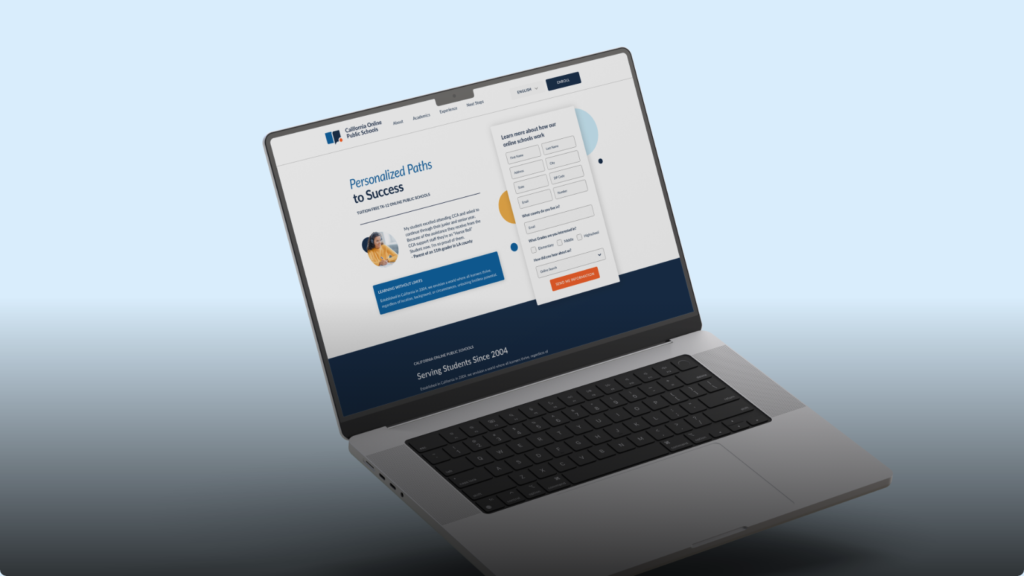
PORTFOLIO · ONLINE CHARTER SCHOOL
California Online Public Schools
1,500+ leads a month and 118x ROAS
View Project

Want paid search that reports in applications and enrolled students? Book your free consultation.
Sources
- Niche, Your mid-cycle pulse check: Real-time insights on K-12 parent search (Oct. 31, 2024; 377 parent and guardian responses), https://www.niche.com/about/enrollment-insights/2024-niche-k-12-parent-survey/
- Google Ads Help, About offline conversion imports, https://support.google.com/google-ads/answer/2998031
- Google Ads Help, About enhanced conversions, https://support.google.com/google-ads/answer/9888145
- Cornell Legal Information Institute, 20 U.S. Code Section 7221i (Definitions: charter school), https://www.law.cornell.edu/uscode/text/20/7221i
- Pew Research Center, Americans’ Use of Mobile Devices in 2026 (Oct. 19, 2026), https://www.pewresearch.org/internet/fact-sheet/mobile/
- U.S. Department of Education, Student Privacy Policy Office, FERPA, https://studentprivacy.ed.gov/ferpa
- Brandastic case study: California Online Public Schools
By Justin Nassie, President and Founder of Brandastic. Brandastic is a Costa Mesa, California digital marketing agency founded in 2010 that has worked with 450+ brands and is a Google and Microsoft Partner. Last updated October 26, 2026.


