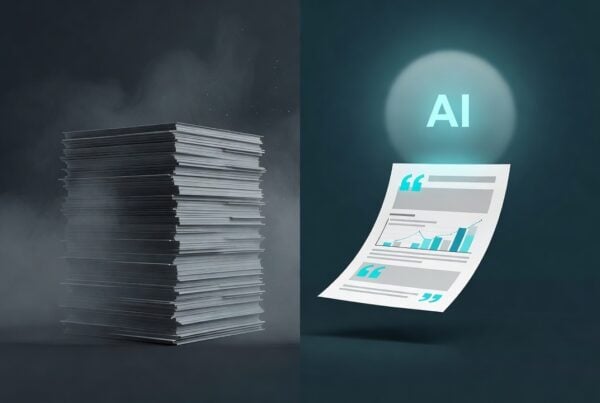
In classic search, you optimized to rank. In AI search, you optimize to be chosen as a source.
When ChatGPT, Perplexity, Google AI Overviews, or other answer engines respond, they don’t need every page that mentions a topic. They need citable content—pages clear enough to quote, structured enough to parse, and credible enough to defend.
That shift sits at the center of answer engine optimization (AEO) and any serious AI search content strategy. Ranking still matters. Being extractable and trustworthy matters more than ever.
What “Citable Content” Means
Citable content is content an AI system (or a human editor) can confidently reuse as support for an answer.
It usually has three traits at once:
- Clear—the answer is easy to find and hard to misread
- Structured—machines can parse sections, steps, and entities
- Supported—claims come with proof, examples, or sources
If any one of those is missing, the page may still rank…and still get skipped in generated answers.
This is the practical bridge between content strategy, AEO, and broader SEO: write pages that resolve questions and leave clean citation fragments behind.
Citable vs. Merely “Published”
| Trait | Published but weak | Citable / AI-readable |
| Opening | Long story, buried point | Direct answer in the first screen |
| Format | Walls of text | Headings, lists, steps, tables, FAQ |
| Claims | “We get great results” | Metrics, methods, timeframes, limits |
| Entities | “Businesses,” “solutions” | Named brand, offer, industry, place |
| Definitions | Assumed knowledge | Plain-language “X is…” lines |
| Freshness | Undated advice | Updated stats, dates, examples |
| Uniqueness | Same tips as 200 competitors | Original angle, data, or process |
Generic pages are easy to replace. Differentiated, proof-led pages are easier to cite—the same quality bar that shows up in strong AEO work and proof-led campaigns like our SEO/AEO case study.
The Building Blocks of Citable Content
1. Direct Answers (BLUF)
Lead with the answer—bottom line up front.
- Put the core definition or verdict near the top
- Use the same phrasing your buyer would type or ask aloud
- Support it immediately with a short why / how / proof block
Answer engines prefer pages that don’t require hunting. Direct answers are also a core habit in LLM seeding.
2. Structured Content (AI-Readable Layout)
Structured content is AI-readable content in practice:
- Descriptive H2s/H3s (often question-style)
- Short paragraphs
- Bulleted criteria and checklists
- Numbered step-by-step guidance
- Comparison tables
- FAQ blocks for follow-ups
- Clear labels for definitions, warnings, and examples
You’re not writing “for robots only.” You’re removing friction for skimmers and parsers.
3. Definitions in Plain Language
Models love clean definitional sentences they can lift:
Answer engine optimization (AEO) is the practice of structuring and supporting content so AI answer engines can understand, trust, and cite it.
One crisp “X is…” line beats three paragraphs of vibe.
4. Step-by-Step Guidance
Process content is highly citable when steps are:
- Numbered
- Actionable
- Complete enough to execute
- Free of hidden prerequisites
Playbooks outperform vague thought leadership because they create extractable sequences.
5. Lists and Criteria
Use lists for:
- Benefits
- Requirements
- Ranking factors
- “What good looks like”
- Mistakes to avoid
Lists travel well into AI answers. Keep each item specific—not filler.
6. Statistics and Original Proof
Numbers make sentences quotable—when they have context:
- Include timeframe
- Include sample or method when possible
- Avoid orphan stats with no source or story
- Prefer first-party data, benchmarks, or named case results
Proof-led pages (see Brandastic’s SEO/AEO case study, LabTech, and KIA’s organic growth results) give models something stronger than opinion.
7. Comparisons
Side-by-side formats help answer “A vs. B” and “which is better for…” queries:
- Tables with consistent columns
- Fair criteria (not stacked decks)
- Clear “best for” lines
- Real implementation notes, not affiliate fluff
8. Consistent Entity Language
Entities are the named things models map: brand, product, service, person, place, industry, tool.
Weak: “An agency helped a client grow traffic.”
Strong: “Brandastic improved organic performance for KIA with a focused SEO program and measurable dealer-request lift.”
Say names the same way across the page, site, and profiles so citations resolve to you.
9. Freshness and Maintenance
Stale content can lose credibility as a source.
- Date important updates
- Refresh stats and screenshots
- Retire dead tools and old UI references
- Keep examples in the current market reality
Freshness is part of quality, not a nice-to-have.
10. Quotable Proof Points
Write lines that can stand alone:
- “X increased Y by Z% in N days by doing A, B, and C.”
- “Use format F when the goal is G; avoid it when constraint H applies.”
If a sentence can’t be lifted without five paragraphs of context, it’s hard to cite.
A Practical Checklist: Is This Page Citable?
Use this before publish:
- Primary question answered in the first screen
- At least one plain-language definition where needed
- Headings match real queries
- Lists or steps where process matters
- One table or comparison if decision-making is involved
- Proof: metric, example, method, or source
- Named entities (brand, offer, audience, geo) are explicit
- FAQ covers natural follow-ups
- No major claim without support
- Update path exists (owner + review date)
If you can’t check most of these, you’re still in “article shipped” mode—not “source material” mode.
How Citable Content Fits a Full AI Search Content Strategy
Citable pages are the atoms. The system around them still matters:
- Owned citable hubs—definitive answers on your domain
- Case studies—attributable results (examples in our case library)
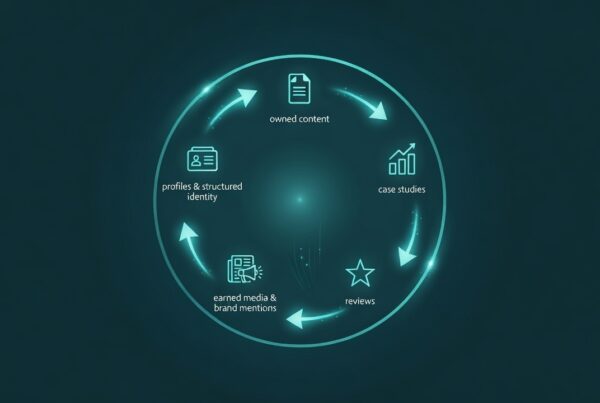
- Off-site corroboration—reviews, partners, earned mentions
- Entity consistency—same story on About, profiles, and service pages
- Conversion path—visibility that becomes pipeline (AI visibility → leads)
That’s the same logic as a full AI visibility system: structure and proof on-site, trust and mentions off-site, including LLM seeding before citations compound. (For acronym map: AEO vs. GEO vs. LLMO.)
Formats That Tend to Earn Citations
Prioritize these over generic “thought leadership”:
| Format | Why it’s citable |
| Definition + framework page | Clean “what is” + unique model |
| Step-by-step playbook | Extractable procedures |
| Original research / benchmarks | Facts others lack |
| Case study with numbers | Attributable outcomes |
| Comparison pages / decision page | Direct “which/when” answers |
| FAQ-rich service page | Matches follow-up questions |
| Checklist / criteria guide | Easy list extraction |
Thin opinion essays without structure or proof are the least efficient investment in an AI search world.
Common Mistakes That Kill Citability
- Buried answers under brand storytelling
- Synonym soup—never repeating the real query language
- Unstructured walls of text
- Claims without numbers, methods, or examples
- Vague entities (“solutions for customers”)
- Keyword stuffing that ruins natural sentences
- Outdated screenshots and stats
- No FAQ for the obvious next questions
- Inconsistent naming of products, services, or the company itself
- Publishing volume instead of upgrading the pages that should be sources
How to Upgrade an Existing URL (Fast)
Don’t always need a new post. Improve the page that should already rank:
- Add a 2-4 sentence direct answer at the top
- Convert dense sections into H2 questions + bullets
- Add one table or numbered process
- Insert proof (metric, mini-case, or method note)
- Standardize entity names
- Add a short FAQ
- Update dates and remove stale references
- Link to a deeper case or related hub
This is often the highest-ROI move in an AI search content strategy: make the “almost good” page actually citable.
Bottom Line
Citable content is content built for extraction and trust:
- Direct answers
- Structured / AI-readable content
- Definitions, steps, lists, comparisons
- Statistics and proof points
- Consistent entities
- Freshness
That’s the craft layer of answer engine optimization—and it’s how brands stop being background text on the internet and start becoming sources linked inside the answer.
Want content built to be cited — not just published? Brandastic builds SEO and AEO systems around structured, proof-led pages. Explore our services or get to know the team.
Frequently Asked Questions
What is citable content?
Citable content is material clear, structured, and supported enough that an AI answer engine (or human editor) can quote it as evidence. It typically includes a direct answer, clean formatting, named entities, and proof.
What is AI-Readable Content?
AI-readable content (or machine-friendly content) uses structure—headings, lists, steps, tables, definitions, FAQs—so systems can parse meaning without guessing. It’s less about stuffing keywords and more about unambiguous layout and language.
How does this relate to answer engine optimization?
Answer engine optimization (AEO) is the broader discipline of becoming visible and trusted inside AI answers. Making pages citable is one of the core content tactics inside AEO. Learn more in our AEO guide.
Do I still need traditional SEO?
Yes. Technical health, crawlability, internal linking, and topical authority still matter. AI search builds on those foundations; it doesn’t replace SEO. The winners do both.
Are long articles more citable?
Not automatically. Length helps only when it adds coverage, examples, and proof. A tight structured playbook can outperform a long generic guide. Aim for completeness and clarity, not word count.
What proof works best for AI search content strategy?
First-party metrics, named case studies, methods, original research, and dated examples work best. Vague testimonials without detail are weaker than a single specific outcome with timeframe and context (KIA case study, LabTech).
Should every page have an FAQ?
Not every page—but any page targeting question-led demand should. FAQs capture follow-ups and create more clean answer blocks. They’re especially useful on service, comparison, and definition pages.
How often should citable pages be updated?
Whenever facts, UI, pricing logic, stats, or market conditions change—and on a scheduled review for top money pages (often quarterly). Freshness supports trust for users and answer engines.