


Quick answer: Programmatic advertising is automated buying of display, video, streaming TV, audio and native ads across thousands of websites and apps through platforms such as Google’s Display & Video 360. Colleges use it to build awareness in target markets, retarget website visitors and reach adult and graduate audiences. It works best alongside search and social, with tight geographic targeting, strong creative and measurement tied to inquiries and applications. Google disables ad personalization for users under 18 on its programmatic products, so plan high school campaigns around parents, context and location.
Key takeaways
- Programmatic buys ad space automatically across websites, apps, streaming TV and audio.
- 70% of college-bound students say they have clicked on college ads (RNL, 2025).
- YouTube showed the biggest gap in RNL’s research: 50% of students use it, but only 26% see college content there.
- Google disables ads personalization for users under 18 on YouTube, Display and Display & Video 360.
- Judge programmatic on lift in inquiries, applications and branded search, not clicks.
What is programmatic advertising?
Programmatic advertising is the automated buying and selling of digital ad space. Instead of calling individual websites to buy banners, an advertiser sets targeting, budgets and bids in a platform, and software buys impressions in real time across websites, apps, streaming TV, audio and digital out-of-home screens. Google’s Display & Video 360, for example, lets teams design creatives, organize audience data, purchase inventory and optimize campaigns in one place (Google).
For colleges, programmatic is mainly an awareness and retargeting channel. It puts your name and programs in front of the right people before they search, and reminds people who visited your site to come back and apply.
How do colleges use programmatic advertising?
| Use | How it works | Best for |
|---|---|---|
| Geographic awareness | Display, video and streaming ads in your recruitment markets | New markets, campus programs |
| Retargeting | Ads shown to people who visited program pages | Converting visitors into inquiries |
| Connected TV (CTV) | Ads on streaming TV apps | Brand campaigns, adult learners |
| Audio and podcasts | Ads in streaming music and podcasts | Adult and commuter audiences |
| Contextual targeting | Ads next to relevant content (careers, health, finance) | Program-specific awareness |
| Account and audience lists | Ads to uploaded lists of inquiries or alumni | Re-engagement and yield |
Does programmatic advertising work for higher education?
It can, when it has a clear job. Students do notice college ads: in Ruffalo Noel Levitz’s 2025 E-Expectations report, 70% of college-bound students said they had clicked on college ads, with Instagram the dominant platform (RNL). RNL also found a gap on YouTube, where 50% of students use the platform but only 26% said they see college content there. Video and streaming placements can fill that gap.
But programmatic is rarely the first channel a college should fund. Search reaches students who are already looking, and social reaches them where they spend time. Programmatic adds reach and frequency once those basics are working. Without search and a strong website to land on, awareness ads produce interest that has nowhere to go.
What are the targeting rules for high school students?
Strict ones, and they matter for undergraduate recruitment. Google’s Ad-serving protections for teens policy disables ads personalization and restricts sensitive categories for users under 18 on YouTube, Google Display Ads and Display & Video 360 campaigns (Google Ads policy). Meta limits ad targeting for people under 18 to age and location (Meta).
In practice, that means:
- Target parents and adults by interest and demographics, not teens.
- Reach teens with contextual placements (content they watch or read) and location.
- Retargeting of people known to be under 18 is limited, so build first-party lists through inquiry forms, events and email.
- Keep creative honest and age-appropriate.
What does programmatic advertising cost?
Programmatic is usually bought by the thousand impressions (CPM), and costs vary by format: standard display is typically cheaper than video, and connected TV usually costs the most. Platform fees, data fees and agency management fees are added on top of media. Ask any partner to show media, data, platform and management costs separately, and to tell you which sites and apps your ads ran on. Transparency matters because programmatic budgets can leak into low-quality inventory if nobody checks.
How should colleges measure programmatic campaigns?
Clicks are a poor measure for awareness media, because most people who see a video or streaming ad do not click. Use measures that show whether the campaign moved people toward applying:
- Lift in branded search for your institution and programs in the targeted markets.
- Inquiries and applications from targeted markets compared with similar markets without ads.
- View-through and cross-device conversions, read with caution.
- Website engagement from targeted audiences: program page views, time on page and return visits.
- Brand awareness surveys in key markets before and after a campaign.
Tie everything back to applications and starts in your CRM. Our guide to tracking ads to enrollment explains how to connect sources to outcomes.
When is programmatic worth it for a college?
- You are entering new geographic markets where students do not know your name.
- You have strong program pages and search campaigns already working.
- You need to reach adult learners who do not follow colleges on social media.
- You have a brand campaign or new identity to launch.
- You have enough budget to reach a meaningful share of a market with repeated exposure.
It is usually not worth it when budgets are small, when tracking is not in place or when the website cannot turn visits into inquiries.
What creative works in programmatic?
Short, clear and specific. Video ads should name the institution and program in the first few seconds, show real students and campus life, and end with a single action. Display ads need a readable headline at small sizes and your logo. Streaming TV ads should look like they belong next to the shows around them. Refresh creative every few weeks to avoid fatigue.
What are common programmatic mistakes?
- Targeting too broadly. A national display campaign for a regional college spreads budget too thin to be remembered.
- Too little frequency. A handful of impressions per person rarely builds awareness. Fewer markets with more repetition usually works better.
- No placement review. Without site and app reports, ads can end up on low-quality or irrelevant content.
- Judging by click-through rate. Awareness ads are meant to be seen, not clicked. Use lift measures.
- Sending traffic to the home page. Retargeting ads should return visitors to the program they viewed.
How does programmatic fit with other channels?
Think of programmatic as the top of the funnel and search as the bottom. A typical mix for a regional college might run search for program terms, Meta and Instagram for students and parents, YouTube and streaming for awareness in key markets, and retargeting across display and social for website visitors. Email and fast follow-up turn the resulting inquiries into applications.
Demographics raise the stakes. WICHE projects U.S. high school graduates will peak in 2025 and decline about 13% by 2041 (WICHE), and the National Student Clearinghouse reported a 1.6% drop in fall 2025 undergraduate enrollment at private nonprofit four-year colleges (NSC). Colleges recruiting in new markets or new audiences need ways to build awareness at scale, and programmatic is one of them.
For the wider strategy, see higher education marketing strategies, digital marketing in higher education and YouTube for schools.
How should you choose a programmatic partner?
Ask how they will target your markets, what inventory they will buy, how they block low-quality sites, how they will measure lift and whether you will get placement reports. Ask for higher education examples tied to inquiries or applications. And ask who owns the data and audiences built during the campaign. Our guide to comparing higher education marketing agencies includes a scorecard.
Channels Brandastic manages
Brandastic plans and runs these channels for colleges and schools:
Every engagement starts with a first-month discovery and strategy phase. A strong strategy is what makes the campaigns work, so before anything launches we:
- Study your market and the colleges you compete with for students.
- Define your ideal target students.
- Identify the students, adult learners, parents and influencers to market to and what they care about.
- Build a communication plan: what to say, on which channels, and when.
- Pin down your college’s pain points, such as low inquiries or weak follow-up, and plan how to solve them.
- Decide whether to market locally, nationally or both.
For an example of results at scale, Brandastic’s enrollment campaigns for California Online Public Schools produce 1,500+ leads a month and a 118x return on ad spend (ROAS).
About the author: Justin Nassie is the President and Founder of Brandastic, an Orange County digital marketing agency he has run for 16 years. He has taught advanced web at Chapman University and has also taught at UC Irvine (UCI).
Keep reading: What an education marketing agency does; Higher education PPC; YouTube for schools; Higher education branding.
Frequently asked questions
What is programmatic advertising in higher education?
It is automated buying of display, video, streaming TV, audio and native ads across many websites and apps to reach prospective students and influencers in target markets.
Is programmatic advertising good for colleges?
It can be, for awareness and retargeting, once search, social and a strong website are working. It is rarely the first channel to fund.
Can colleges target high school students with programmatic ads?
Only in limited ways. Google disables ads personalization for users under 18 on YouTube, Display and Display & Video 360, so use contextual and location targeting and target parents.
How do you measure programmatic advertising?
Look at lift in branded search, inquiries and applications from targeted markets, website engagement and awareness surveys, not clicks alone.
What is connected TV advertising?
Ads shown on streaming TV apps. Colleges use it for brand awareness, especially with adult learners and parents.
How much does programmatic advertising cost?
It is usually priced per thousand impressions and varies by format, plus platform, data and management fees. Ask for each cost separately.
Does Brandastic run programmatic campaigns for colleges?
Brandastic runs YouTube, search, Meta, LinkedIn and other paid media for colleges and schools, with tracking tied to inquiries and applications.
Our Work in Education
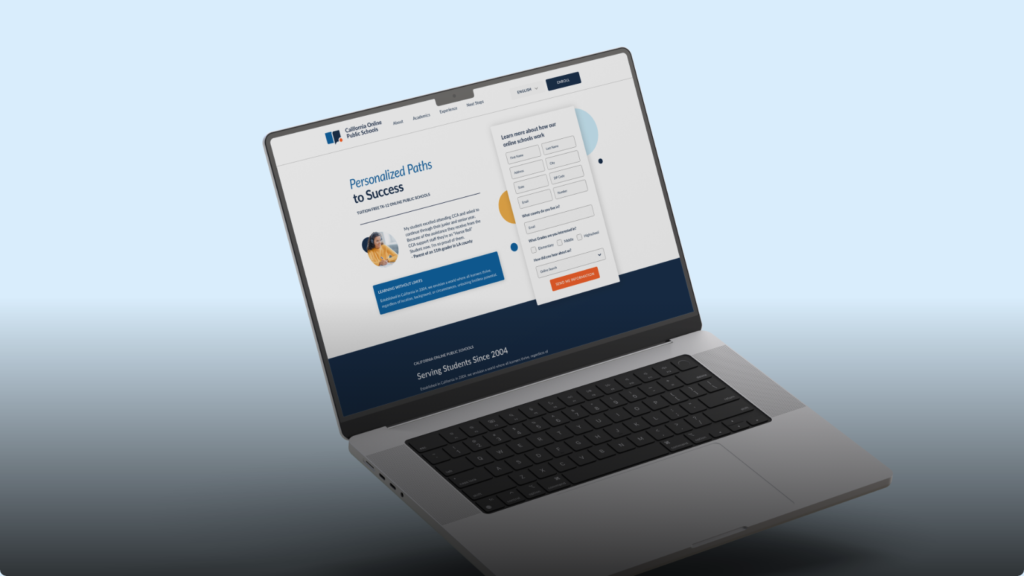
PORTFOLIO · ONLINE CHARTER SCHOOL
California Online Public Schools
1,500+ leads a month and 118x ROAS
View Project

Thinking about awareness campaigns in new markets? Book your free consultation.
Sources
- Google, Display & Video 360 overview, https://support.google.com/displayvideo/answer/9059464
- Ruffalo Noel Levitz (RNL), 2025 E-Expectations Trend Report, https://learn.ruffalonl.com/rs/395-EOG-977/images/2025_E-Expectations_Report.pdf
- Google Advertising Policies Help, Ad protections for children and teens, https://support.google.com/adspolicy/answer/15416897
- Meta, Continuing to Create Age-Appropriate Ad Experiences for Teens (Jan 10, 2023), https://about.fb.com/news/2023/01/age-appropriate-ads-for-teens/
- WICHE, Knocking at the College Door, 11th edition (December 2024), https://www.wiche.edu/knocking/key-findings/graduates/
- National Student Clearinghouse Research Center, Final Fall Enrollment Trends 2025 (Jan 15, 2026), https://nscresearchcenter.org/final-fall-enrollment-trends/
By Justin Nassie, President and Founder of Brandastic. Brandastic is a Costa Mesa, California digital marketing agency founded in 2010 that has worked with 450+ brands and is a Google and Microsoft Partner. Last updated December 10, 2026.


