


Quick answer: To market a new private school, start 12 to 18 months before opening. Define who the school is for, build a simple website with an interest list, host small information nights, recruit founding families who will spread the word, and run local search and social ads around events. Your first goal is a list of families you can talk to.
Key takeaways
- Start 12 to 18 months before opening day.
- Your first asset is an interest list, not a brochure.
- Founding families are your best marketers; give them a real role.
- Show the people: head of school, founding teachers, the building as it comes together.
- Measure interest-list growth, info-night attendance and applications by month.
What makes it different to market a new private school?
A new school has no reviews, no alumni and often no finished building. Families are being asked to trust a promise. Your marketing has to make the people and the plan visible: who leads the school, what a day will look like, and why it is worth being first.
How to define who your new school is for
A new school cannot be everything to everyone. The clearer you are about the families you serve, the easier every later marketing decision becomes.
- Describe the child. What grades, learning styles, interests or needs is the school built for?
- Describe the family. What do they value, where do they live and what are they unhappy with today?
- Name the alternatives. Which schools would these families otherwise choose, and why would they choose you instead?
- Write a one-sentence promise. For example: “A small, project-based middle school for curious kids who want to build real things.”
- Test it in conversations. Share the promise with twenty or so families who fit the description. Notice which words make them lean in.
This work shapes the name, the website, the information nights and the ads. Our guide to school branding goes deeper on positioning.
An 18-month launch timeline
| Months before opening | Focus |
|---|---|
| 18 to 12 | Positioning, name and brand; simple website with interest form; Google Business Profile once you have an address |
| 12 to 9 | Information nights; founding family outreach; first social posts; local partnerships |
| 9 to 6 | Applications open; Search and Meta ads around events; head of school meet-and-greets |
| 6 to 3 | Campus previews or hard-hat tours; acceptance and enrollment follow-up |
| 3 to 0 | Welcome events, uniform and supply days, re-confirm every family |
How to recruit founding families
- Invite early families to small coffee conversations with the head of school.
- Ask for input on real decisions, such as the schedule or a club.
- Give them something to share: a short video, a one-page overview and a link.
- Recognize founding families in a visible, lasting way.
What to say when you have no track record
Families considering a new school have one big worry: will this actually work? Your marketing should answer that worry with people, plans and proof you can show today.
- The leaders. Introduce the head of school and founding teachers with photos, short videos and their experience.
- The plan. Share a sample daily schedule, curriculum outline and class sizes.
- The place. Post progress photos of the campus, and offer hard-hat tours or visits to a temporary space.
- The partners. Mention accreditation steps, community partners and advisors, accurately and with their permission.
- The first families. As founding families sign on, share their reasons (with permission). Early families reassure later ones.
Be honest about what is still being decided. Families trust a school that says “Here is what we know and here is when we will know the rest” more than one that overpromises.
Which channels work before a school opens?
Before a school opens, the channels that work are a simple website with an interest list, Google Search ads for parents looking for new options, Meta ads inviting local parents to events, local partnerships, regular email and text updates and local news coverage. All of them should feed the interest list.
| Channel | Role |
|---|---|
| Website and interest list | Capture every interested family |
| Google Search ads | Catch parents searching for new options |
| Meta ads | Reach local parents of the right age group with event invites |
| Local partnerships | Preschools, youth sports, community groups |
| Email and text | Keep the list warm month to month |
| Public relations | Local news on the opening |
For a charter launch, add clear explanations of how enrollment and any lottery work; see Charter school lottery marketing.
How to run an information night for a new school
| Part | What to cover | Time |
|---|---|---|
| Welcome | Why the school exists and who it is for, told as a story by the founder or head of school | 10 minutes |
| A taste of learning | A short sample lesson or project demo by a founding teacher | 15 minutes |
| The plan | Schedule, class sizes, timeline to opening, how admissions works | 10 minutes |
| Questions | Open Q&A, including honest answers about what is still in progress | 15 minutes |
| Next step | How to apply or join the interest list, and a date for the next event | 5 minutes |
Keep groups small enough for real conversation. Collect names and emails at the door, and follow up within 48 hours with a personal note, the slides and a link to apply. Our guide to open house follow-up has more on the follow-up.
What to measure
- Interest-list signups by month and source
- Information night RSVPs and attendance
- Applications started and completed
- Deposits or enrollment contracts by grade
Set grade-level seat goals early and work back to how many interested families you need, using conservative conversion rates until you have your own.
Building the website before you open
A new school’s website starts small and grows. In the first months it needs only a few pages, each with a clear purpose.
- Home: the one-sentence promise, a photo of the leaders and an interest-list form.
- Our story: why the school is opening and who it is for.
- Leadership and teachers: introductions as staff are hired.
- Program: sample schedule, curriculum outline and approach.
- Events: upcoming information nights with RSVP.
- Admissions: timeline, how to apply and where to find tuition and aid information once set.
- FAQ: answers to the questions you hear at every event.
Add a Google Business Profile once you have a verifiable address (see Google’s guidelines for representing your business), and keep it updated. See our private school website design guide for the full checklist.
A worked example: the first 90 days of a new school’s marketing
Here is how a founding team might spend its first three months, roughly 18 to 15 months before opening. It is illustrative; adjust it to your own timeline.
- Month 1: Write the one-sentence promise and test it with families. Reserve the domain and social handles. Launch a one-page website with an interest form and a short founder video.
- Month 2: Host two small coffee conversations with interested families. Start a monthly update email to the interest list. Meet preschool directors and community leaders nearby.
- Month 3: Announce the first information night. Add pages for leadership and the program. Begin modest Meta ads to local parents inviting them to the event, and track every RSVP by source.
At the end of the 90 days, you should know how many families are on the list, where they came from and which messages made them lean in. That shapes everything that follows.
Mistakes new schools make in marketing
- Waiting until the building is finished to start marketing.
- Spending on glossy print before there is a website and an interest list.
- Describing the school in general terms that could fit any school nearby.
- Collecting interest-list names but not contacting them for months.
- Running ads with no event or next step to point to.
Key terms for new school launches
| Term | Plain-English meaning |
|---|---|
| Interest list | Families who asked to hear more, before applications open |
| Founding family | An early family that enrolls in the first year and helps shape the school |
| Information night | A small event where leaders explain the school and answer questions |
| Hard-hat tour | A safe, guided visit to a building under construction or renovation |
Channels Brandastic manages
Brandastic is a full-service digital marketing agency. We plan and run these channels for schools:
Channels you can choose from:
Every engagement starts with a first-month discovery and strategy phase. A strong strategy is what makes the campaigns work, so before anything launches we:
- Study your market and the schools you compete with for families.
- Define your ideal target students.
- Identify the ideal target parents to market to and what they care about.
- Build a communication plan: what to say, on which channels, and when.
- Pin down your school’s pain points, such as low inquiries or weak follow-up, and plan how to solve them.
- Decide whether to market locally, nationally or both.
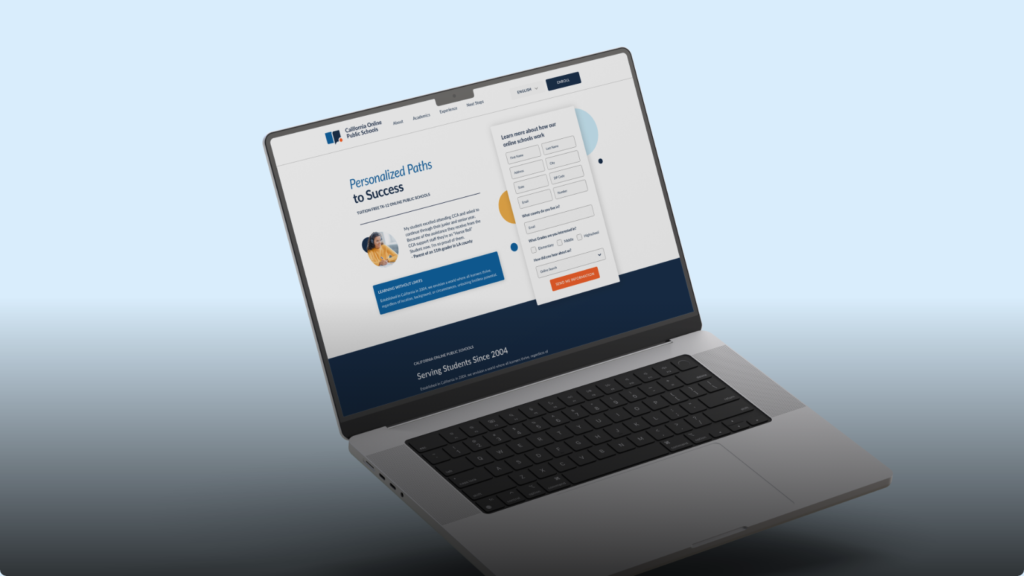
For an example of results at scale, Brandastic’s campaign for California Online Public Schools produced 1,500+ leads a month and a 118x return on ad spend (ROAS), and the school surpassed its annual enrollment target by 7+ percent.
About the author: Justin Nassie is the president and founder of Brandastic, an Orange County full-service digital marketing agency he has run for 16 years. He has taught advanced web at Chapman University and has also taught at UC Irvine (UCI).
Keep reading: Independent school marketing: a 12-month plan; Your school marketing plan: a month-by-month template; How to plan a school marketing budget.
When you are ready for help, compare options in our guide to the best private school marketing agency choices for 2027, or see how Brandastic works as a school marketing agency.
Frequently asked questions
When should a new private school start marketing?
About 12 to 18 months before opening, starting with positioning and an interest list.
How do you get the first families for a new school?
Small information nights, founding-family invitations, local partnerships and targeted local ads.
Should a new school buy ads?
Yes, once you have a website, an event to promote and someone to follow up.
What should a new school website include?
Who the school is for, leadership, the plan for a typical day, location, timeline and an interest form.
How do you market a school that is not built yet?
Show the people and the plan: leaders, founding teachers, sample schedules and progress photos. Host small information nights, keep an interest list warm with monthly updates, and offer hard-hat tours when it is safe.
How many founding families does a new school need?
It depends on the school’s size and financial plan. Work backward from your opening enrollment goal and your expected conversion rates, then set monthly interest-list and application targets.
What should a new school measure first?
Interest-list growth by source, information night attendance, and applications started and completed each month. These show early whether the plan is on pace.
How do new schools build trust without reviews?
Make the leaders and teachers visible, share specific plans, invite families into decisions, host small events and let founding families tell their own stories once they have signed on.
Should a new school hire a marketing agency?
It can help with brand, website and ads if the founding team is stretched. Keep founders visible in the marketing, since families are choosing the people as much as the plan.
Does Brandastic help new schools launch?
Yes. Brandastic handles branding, websites, ads and follow-up for schools, including new ones.
Our Work in Education
PORTFOLIO · ONLINE CHARTER SCHOOL
California Online Public Schools
1,500+ leads a month and 118x ROAS
View Project

Every school’s plan is different. Book a free consultation and we’ll walk through channels, goals and budget together.
Opening a new school? Book your free consultation.
Sources
- Brandastic case study: California Online Public Schools, https://brandastic.com/portfolio/california-online-public-schools/
By Justin Nassie, President and Founder of Brandastic. Brandastic is a Costa Mesa, California full-service digital marketing agency founded in 2010 that has worked with 450+ brands and is a Google and Microsoft Partner. Last updated November 23, 2026.


